
AI: Embracing Mistakes Makes Us Humans
As artificial intelligence reshapes how we learn, work, and create, a new unease is emerging: AI impostor syndrome. This reflective essay examines how reliance on AI can blur authorship, and ethical responsibility. This article reclaims human ownership through refinement, ethical awareness, and embracing human imperfections. A new idea on ownership degrees is exposed to begin gaining territory in the face of AI authorship and shift it back to human-authorship. We need to be more human than ever.
Iveth Celi
1/2/20264 min read
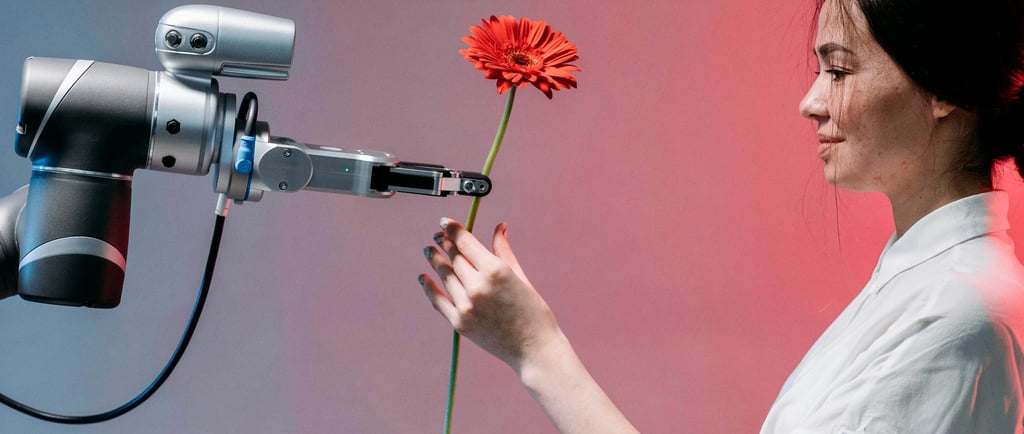
In the last week, News with an Accent has followed the most recent trends in AI advancements. From Grok 4, ChatGPT, Claude, and Perplexity, through major health and technological shifts, AI trends continue to be the topic to follow in 2026. Today, human errors, refinement, ownership degrees, human face-to-face discussions, and AI ethics might be the key to avoid AI impostor syndrome and attaining human ownership.
But what is impostor syndrome? and what is AI impostor syndrome? According to Psychology Today, people with impostor syndrome believe they are undeserving of their achievements. Feelings of insecurity and incompetence make them doubt their own intelligence. However, these same people often show evidence of achievement, frequently holding multiple degrees and being highly accomplished.
This concept has gone further with AI. The impostor syndrome has undergone a major quantum shift. Boosted by AI, some people may be falling into an actual impostor role by relying completely on AI systems instead of trusting their own creative capacities. In this way, a new and enhanced concept appears: AI impostor syndrome. As Psychology Today explains, "it's the cognitive dissonance that arises when artificial intelligence amplifies our capabilities while simultaneously making us question our own intellectual legitimacy.”
Let’s explain this further. In the midst of AI advancements, where people earn degrees and education certificates supported by AI tools, multiple "impostors" may appear, at least at some degree. Nowadays, most educational backgrounds are propelled by a mixture of human effort and AI assistance. ChatGPT, enhances texts, performs complex calculations, and even solves exams in seconds. As users, we are getting used to simply giving commands: ChatGPT, please calculate the following arithmetical problem; write me an email; create a draft for a cover letter; give me more ideas on this topic; give me a chocolate cake recipe; explain how to create a profitable business and set up its planning; code a landing page; make an app; and the list goes on.
From this context, how much are we relying on AI systems? Are we facing an excess of dependency that might make us incapable of creating and calculating on our own? Are we truly enhancing our capabilities or are we shifting our minds into a stagnant state? Are we becoming masters of the lamp's genie, or are we becoming its servants?
To offer a solution, refinement is at stake. As humans, to avoid becoming AI impostors, how much refinement of projects and tasks is required to attain human ownership, or to be considered organic? Eighty percent? Seventy? Fifty? At what degree a person should be called the author of a poem, a text, a book, a discovery, or any creative work if AI collaborates at 50% or more of the development process? At what point are we AI impostors?
Recently, I met someone pursuing a big data career. The program seems interesting. However, I had the chance of observing this person during an on-line class and while presenting an on-line exam. The result was a class where students were partially attending, partially working in their own lives, and therefore partially learning. Minimum attention was the queen of the party. Later, using ChatGPT to pass the exam felt as natural as turning on a computer. Is AI going to become as natural as turning on your laptop? the answer is yes.
In The Rise of the Network Society, Manuel Castells describes an "information technology paradigm" that merges human minds with machines through networks. AI is a clear example of this network-driven mind-merging process. At this exact moment, we might be stepping on a stage where being AI impostors is a temporary phase before full integration happens. There is no need to panic, it will be natural; electricity, internet, and other technologies followed the same path. However, the important question remains: who will have access to the benefits of this merging, and how will it affect our ability to earn a living? After all, this is about money, income, and survival. As Castells explains, an increasing divide between those with access to networks and technology (often the rich or elites) and those without (the poor or excluded) will occur.
From the above, governments, companies, universities, teachers, and scholars must come together to ensure equitable access and data with ethical standards. Ethics are more necessary than ever, and it is key to achieving concrete results that include both elite and non-elite groups.
Where should we begin? There are individual actions to take. First, reflect on the following questions: Are you an AI impostor? Are you mainly an AI user rather than a creator? If so, admit it, this acknowledgment can push your brain forward and claim human-ownership from AI, not the other way around. Second, the truth is that today we are all AI impostors to some degree. What degree are you embracing? Recognize it and refine it to reach a fair level of human-ownership. Third, are you consciously exercising ethics in your daily AI interactions?
If these questions sparked your attention, how can humanity deal with AI impostor syndrome? The answer lies in refinement levels, strengthened human capacities, AI ethics, and embracing human error as the most reliable marker of humanity. Mistakes make of us human. It also requires deep face-to-face human conversations, and more creative ways of proving that we are still creators. After all, there is nothing more beautiful than fully earning and owning the knowledge our brains work to obtain.
Important Note:
This article was created with approximately 2% AI assistance. AI was used solely as a time-saving tool to verify core concepts related to impostor syndrome, AI impostor syndrome, and references to Manuel Castells’ work. The author first read The Rise of the Network Society in 2004, and the ideas discussed here are grounded in long-standing human study, memories, and reflection.
The entire text was written by the author without AI-generated content, relying instead on fully human, imperfect, and intentional refinement. As a native Spanish speaker, I chose to write this piece entirely in English from the first sentence, without the use of AI translation tools. The author (ICeli) therefore claims full human ownership of this work, embracing any human errors as part of the creative process.
This article also introduces the concept of a “human-ownership degree,” coined by the author here and still in refinement. Consider this piece a reminder that imperfection, effort, and authorship remain essential traces of our humanity.
Updates
Get your tech and AI news summarized in minutes.
Alerts
© 2025. All rights reserved.